
Press Room & Media
In the News
Public bank puts community capitalism to work
MY VIEW: Peter Smith and Angela Merkert
Santa Fe New Mexican | January 8, 2022
We all know that New Mexico’s national rankings are poor when it comes to community economic development, regenerative agriculture, early childhood education, alternative energy and infrastructure enhancement, among other things. And we also know that, when the federal pandemic recovery funds fade away after 2022 and fossil fuel revenues decline in the years ahead, continuing investment in these and other priority spending areas will be a huge challenge for the Legislature and the governor.
Ellen Brown: The Real Antidote to Inflation
The Federal Reserve is caught between a rock and a hard place. Inflation grew by 6.8% in November, the fastest in 40 years, a trend the Fed has now acknowledged is not “transitory.” The conventional theory is that inflation is due to too much money chasing too few goods, so the Fed is under heavy pressure to “tighten” or shrink the money supply. Its conventional tools for this purpose are to reduce asset purchases and raise interest rates. But corporate debt has risen by $1.3 trillion just since early 2020; so if the Fed raises rates, a massive wave of defaults is likely to result. According to financial advisor Graham Summers in an article titled “The Fed Is About to Start Playing with Matches Next to a $30 Trillion Debt Bomb,” the stock market could collapse by as much as 50%.
Your State Could Decide to Open a Bank
For many Americans with limited or no experience with bank accounts, navigating the fees and policies that would make them account holders can be intimidating. And many small business owners seeking loans just can’t meet the standards set by traditional banks.
While many retail banks have worked to demystify procedures and lower fees, advocates for state- or city-run banks say they can do it better by putting the public good ahead of profits.
Payday loans are a problem. Can a public bank be part of the solution?
When the coronavirus first posed a threat to Americans’ health and finances, Tiffany Moore of Forest Park went to an installment lender for the first time in hopes of some financial relief.
The good news: she got approved for a $9,500 loan to make up for a tenant at her property who couldn’t make rent. The bad news: An interest rate of 35.989%.
It was easy to sign onto a contract that brought temporary relief. But realizing that she would end up paying more than twice what she borrowed, Moore paid the loan off early.
Keeping the Money at Home: Thoughts on A Public Bank for New Mexico
Q&A with Sarah Manning: Sarah Manning is a coordinator of outreach and public partnerships for the Alliance for Local Economic Prosperity (AFLEP), a nonprofit organization that educates and advocates for improving economic prosperity in New Mexico. The organization prepared a bill last regular session to establish a public bank and is ready with a new version for introduction during the 30-day legislative session that begins in January.
Goals for 2022 NM Legislative Session
Goals for 2022 NM Legislative Session
New Mexico Public Bank FAQs – The Goal for the 2022 Legislative Session: Establish a Public Bank in New Mexico. September 2021
A view from history on the positive potential of a National Infrastructure Bank
Public Banking Institute
November 2021
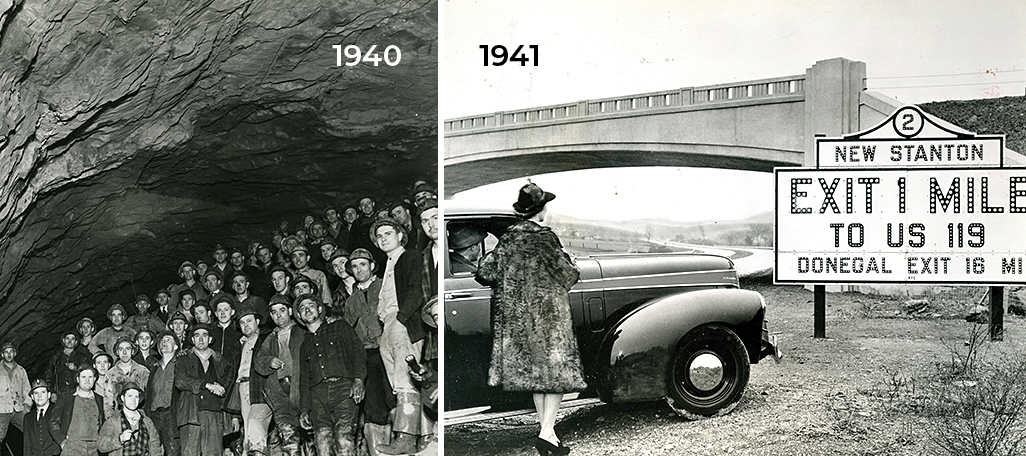
The proposed National Infrastructure Bank bill (NIB) now before Congress as HR 3339 is modeled after the Reconstruction Finance Corporation (RFC), which was instrumental in pulling the U.S. out of the Great Depression in the 1930s.
Returning Morality to Small Dollar Lending
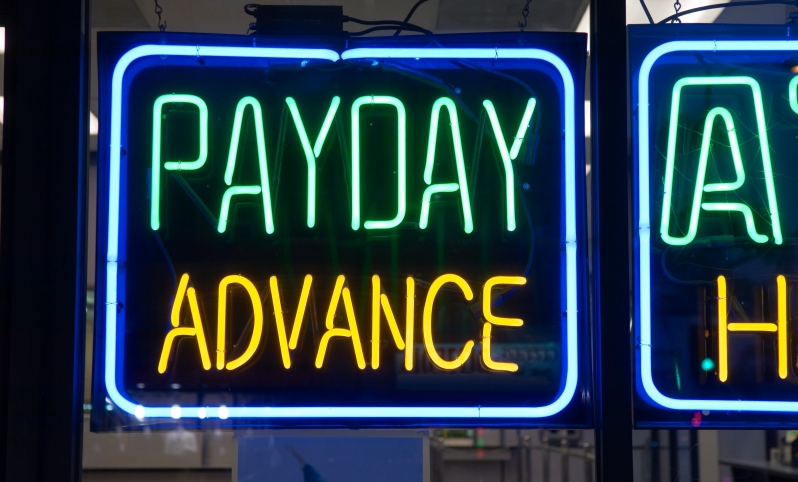
Payday loans are an example of small-dollar loans. These loans offer financing to predominately low-income communities. Borrowers must prove that they have regular paychecks and give lenders access to their bank accounts for direct withdrawals. Although these are short-term loans, lenders will “roll over” the loans for a fee if the borrower struggles with repayment. These fees typically exceed the cost of the original loan.
A borrower with a $300 loan could, for example, pay $50 every two weeks to roll over the loan and avoid default. After a year, the borrower could ultimately owe $1,300 of interest on a $300 dollar loan.
Public Banking Has the Potential to Truly Revolutionize Our Economy
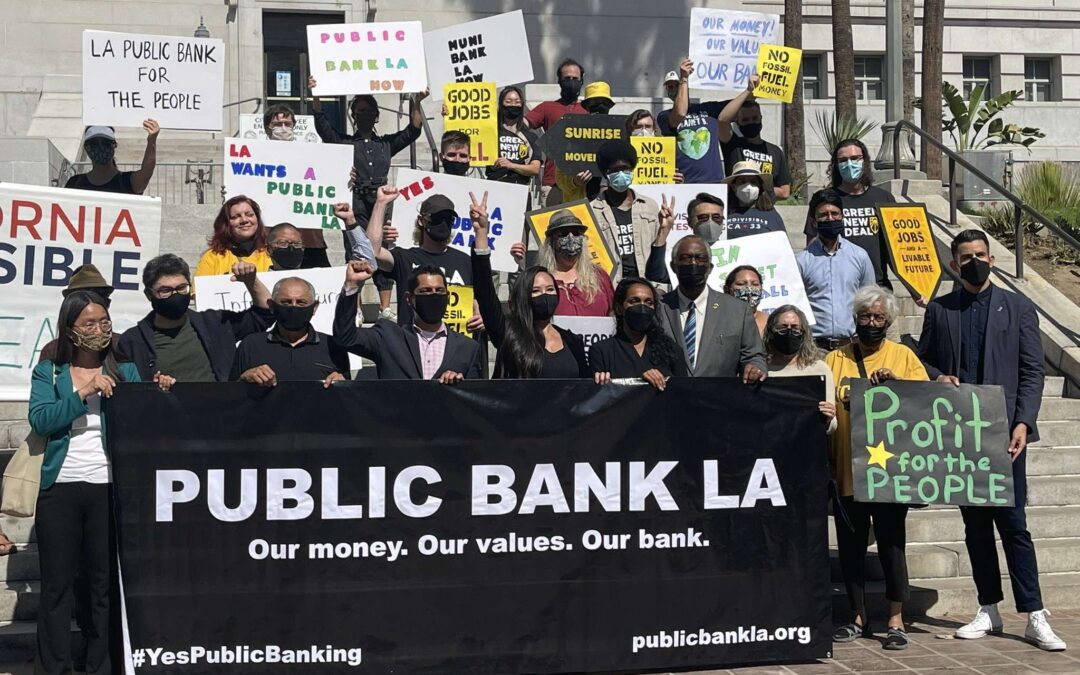
This is the situation we face in the United States. Currently, private banks create all the money in circulation — except for the bills and coins issued by the Treasury — by making loans. The Federal Reserve is a network of private banks with a special relationship to the Treasury. Interest on our growing federal deficit is paid to banks that hold Treasury notes. When banks become “too big to fail,” it is our tax dollars that bail them out. It’s clear that we have to address control of the money supply in order to solve a host of social, equity and climate issues. Yet, where can we get the leverage to make such a massive transformation?

Ellen Brown: Wall Street’s Latest Scheme Is Monetizing Nature Itself
Just in time for the UN’s policy push for “30 x 30” – 30% of the earth to be “conserved” by 2030 – a new Wall Street asset class puts up for sale the processes underpinning all life.

No Results Found
The page you requested could not be found. Try refining your search, or use the navigation above to locate the post.

Episode: Everyone deserves a public bank

“I had the good fortune to work on this initiative before Bernie kidnapped all my time. This is one of those no-brainer initiatives that only the 1% could oppose. It has the potential to save the state millions of dollars by vastly reducing the cost of its bonds to improve infrastructure funding. in a public bank, our state funds can be used to build our local economy and our local infrastructure.”
– Paul Gibson
Retake Our Democracy